
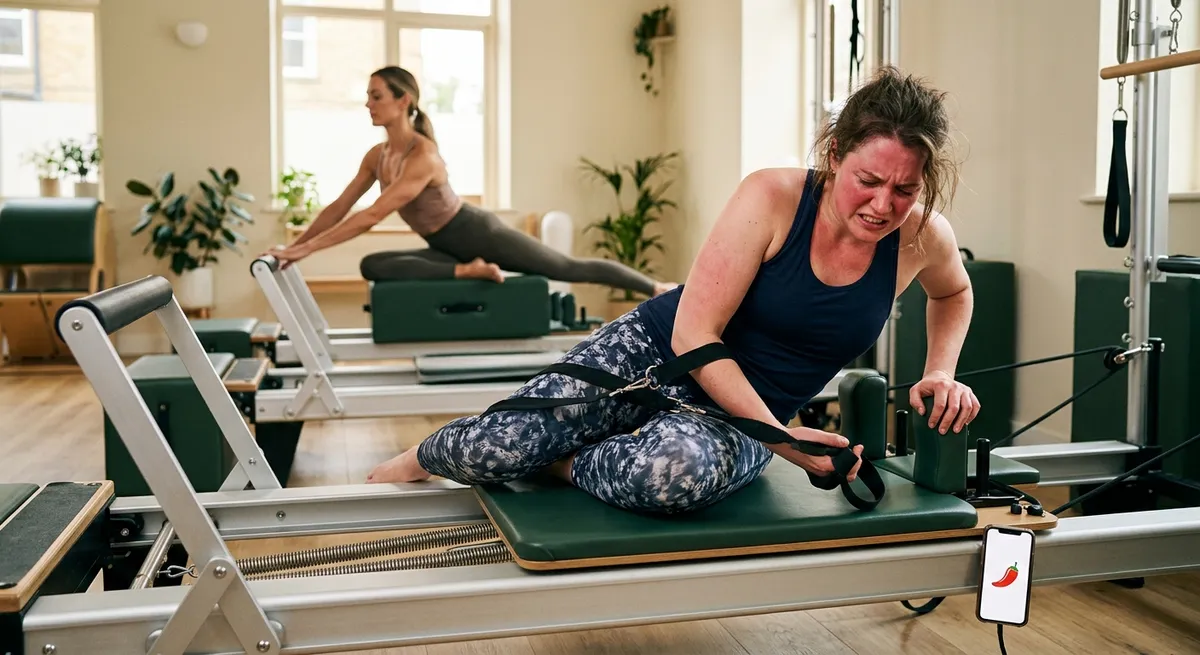
Here's what nobody tells you about fitness tourism: studios in other cities will absolutely let you walk into an advanced class, suffer for an hour, and only later will you discover they tried to warn you. With an emoji.
This is exactly what happened to a writer for Monocle who landed in Abu Dhabi on a work trip, overpacked gym kit included, and ended up in a reformer Pilates class at Bodytree studio that was — to put it plainly — not for beginners. The studio had sent a red chilli-pepper emoji ahead of the session as a signal that the class would be too intense for newcomers. The warning went unread. The suffering did not.
If you're the kind of person who packs running shoes and a full gym kit for every work trip and genuinely intends to use them, this one's for you. By the end you'll know exactly how to not make this mistake in a new city.
The Anatomy of a Fitness Tourism Fail
The setup is almost too relatable. A coworker convinces you to join them for a class. It sounds fun, maybe even adventurous — trying a local studio, ticking off the wellness box on a trip. You say yes without asking the most important question: what level is this class?
In Abu Dhabi, the Monocle writer and a colleague were brought along by a coworker to what turned out to be an advanced reformer Pilates session. Reformer Pilates uses a sliding carriage, springs, and cables to make exercises more challenging than mat Pilates — and an advanced class assumes your body already knows what it's doing on that machine. Theirs did not.
The kicker? Bodytree had sent a red chilli-pepper emoji in advance. A literal warning system, color-coded and clear. It just never got read.
Why the "Friend Who Convinced You" Is Never the One Struggling
There's a universal gym class dynamic at play here that any group fitness regular will recognize: the person who talked you into the class is somehow fine. They're keeping up, maybe even looking good doing it, while you're recalibrating your entire understanding of your own fitness level.
This is the friend-who-disappears phenomenon — not physically, but socially. They're in the zone. You're just trying to survive the next spring adjustment. It's not malicious, it's just the gap between someone who knows what they signed up for and someone who absolutely did not.
If a friend invites you to a class in a city you don't know, the move is simple: ask them to screenshot the class description and level rating before you commit. That's it. Thirty seconds of due diligence.
How to Research a Fitness Class Before You Book It Anywhere
Fitness tourism is genuinely great — trying local studios is one of the better ways to experience a city's wellness culture. But it rewards the people who do ten minutes of homework.
Check the studio's own class labeling system. Most studios use some version of beginner / intermediate / advanced, or color-coding, or yes, emoji. Bodytree used a chilli pepper. Some studios use star ratings. Find out what the system is before you assume the class is appropriate for your level.
Read the class description literally. Words like "dynamic," "athletic," or "fast-paced" in a reformer Pilates context mean the instructor is not going to slow down for you. "Foundations" or "intro" classes exist for a reason — they're not embarrassing, they're efficient.
Ask the studio directly. A quick message or email saying "I've done mat Pilates but never reformer — which class do you recommend for a first timer?" will get you a straight answer and potentially save you from an hour of controlled humiliation.
Don't let a local guide you without vetting their fitness baseline. Your coworker who does this class every week has context you don't. Their "it's fine, anyone can do it" is coming from a body that's been doing it for months.
Reformer Pilates Is Not Mat Pilates With a Fancy Bed
This distinction matters more than most people realize before their first class. The reformer machine adds resistance and instability that makes movements significantly harder to control. Exercises that feel manageable on a mat translate to full-body coordination challenges on the reformer, especially in an advanced class where the tempo doesn't accommodate figuring out the equipment mid-set.
Reformer Pilates has genuinely exploded as a fitness trend, and studios like Bodytree have become destination wellness spots for travelers and expats. The demand is real. But the hype cycle around it has also convinced a lot of people that it's more accessible as a drop-in activity than it actually is at the intermediate and advanced levels.
If you're new to reformer, book a foundations or intro class first. Always. Even if you're fit. Even if your coworker says it'll be fine.
The Actual Lesson From Abu Dhabi
The Monocle writer's experience at Bodytree is funny in retrospect — the kind of story you tell at dinner about the time you confidently walked into an advanced class abroad and paid for it physically. But the practical takeaway is genuinely useful for anyone who travels with workout intentions.
Studios communicate class intensity for a reason. Emoji, color codes, descriptors, level tags — these are not aesthetic choices. They're there so you don't end up the person on the reformer who can't figure out why everyone else looks calm while you're quietly negotiating with your own hip flexors.
Next time a studio sends you a red chilli pepper before your class, stop what you're doing and find out what that means. Your body, and your ego, will thank you.